HTTP
The HTTP monitor checks availability of websites and APIs by sending HTTP requests from multiple geographic regions.
How it works
- The system sends an HTTP request to the specified URL from the selected regions
- You can configure the method and check the response code, headers and body
- If the conditions are not met — a notification is sent
Parameters
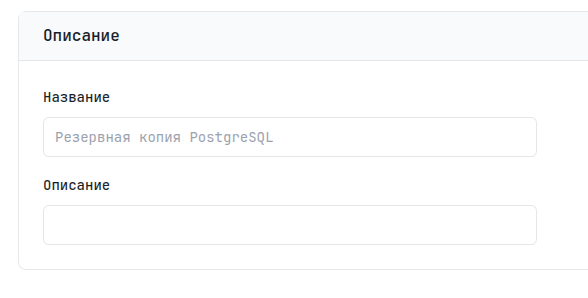
Description
| Parameter | Description | Required |
|---|---|---|
| Name | Unique monitor name | Yes |
| Description | A note about the task purpose | No |
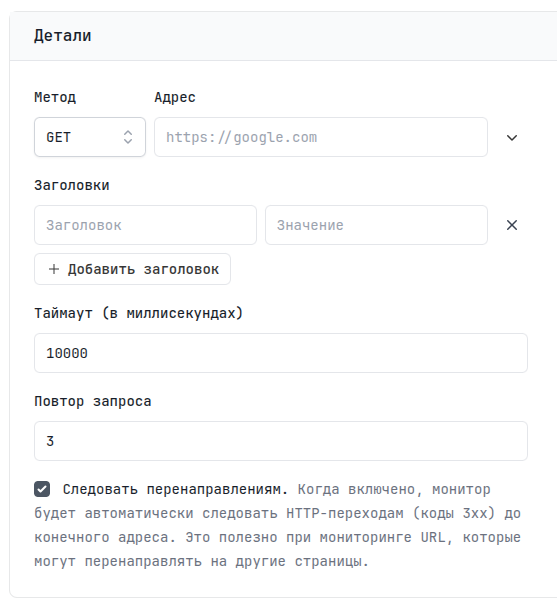
Details
| Parameter | Description | Default |
|---|---|---|
| Method | HTTP request method | GET |
| URL | URL of the resource being checked | - |
| Headers | Additional HTTP headers | — |
| Timeout | Maximum response wait time | 10 seconds |
| Retries | Number of retries on error | 3 |
| Follow redirects | Whether to follow redirects (3xx) | Yes |
Supported methods:
- GET
- POST
- PUT
- PATCH
- DELETE
- HEAD
- OPTIONS
- TRACE
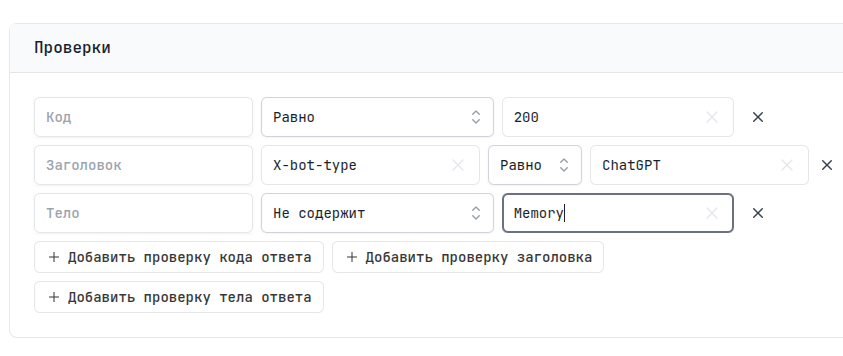
Checks
The HTTP monitor supports various response checks:
Regions
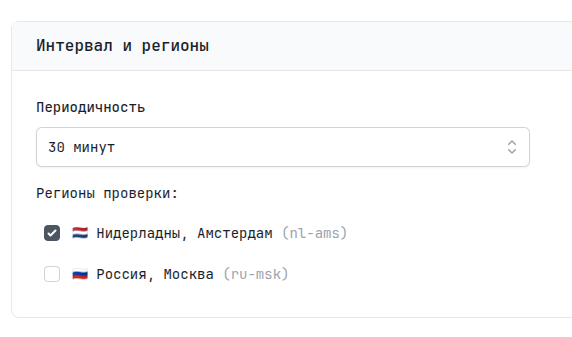
Choose one or more regions for the check. The monitor will send requests from each selected region at the specified interval.
| Parameter | Description | Default |
|---|---|---|
| Interval | Check frequency | 5 minutes |
Notifications
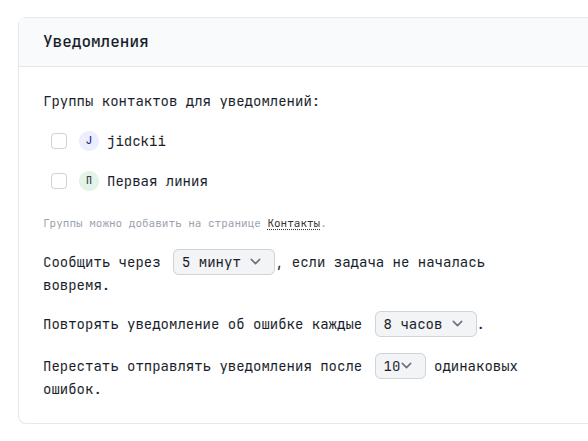
Here you can specify contact groups for notifications. If left unspecified, the user's email is used.
You can also set a waiting period — Grace Period. It is added to the expected time of the next signal. For example, if the interval is 5 minutes and the Grace Period is 2 minutes, the alert will be sent 7 minutes after the last signal. Repeated notifications remind you of the problem; you can set the interval and number of these reminders.
SSL/TLS and Whois monitoring
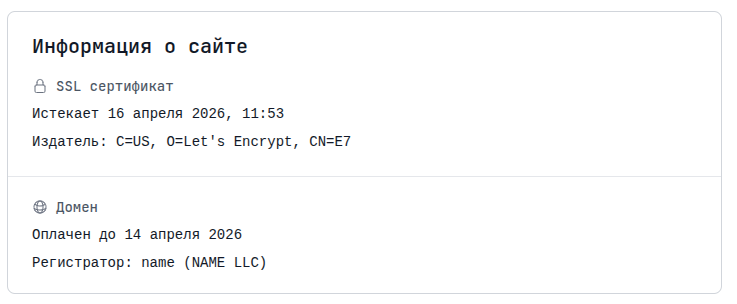
The HTTP monitor automatically checks SSL certificates for HTTPS URLs and shows information about them, as well as the domain registrar and the expiration date.